 Weather
 Locations
 Careers
 Login
Login

Producer perspectives

During recent discussions among AgWest's Local Advisory Committee (LAC), producers shared updates on their operations and industry outlooks, revealing four common concerns echoed across commodities and regions: rising input costs, weather and drought pressures, labor challenges, and trade uncertainty. This spotlight explores these key issues and the trends shaping the agricultural economy.
1. Rising input costs are a top concern.
The most frequently cited challenge was the continued rise in production expenses. Producers across a diverse range of commodities expressed concern that costs remain elevated while commodity prices have become increasingly volatile. As one producer noted, “The continued gray cloud over the industry is operational costs. They are unrelenting." The chart below highlights this challenge for producers: commodity prices may rise and fall with market conditions, but input costs rarely move lower with the same speed or magnitude. As production expenses continue to rise, producers are increasingly reliant on strong commodity prices to maintain profitability.
Indexes of crop prices received vs. input prices paid
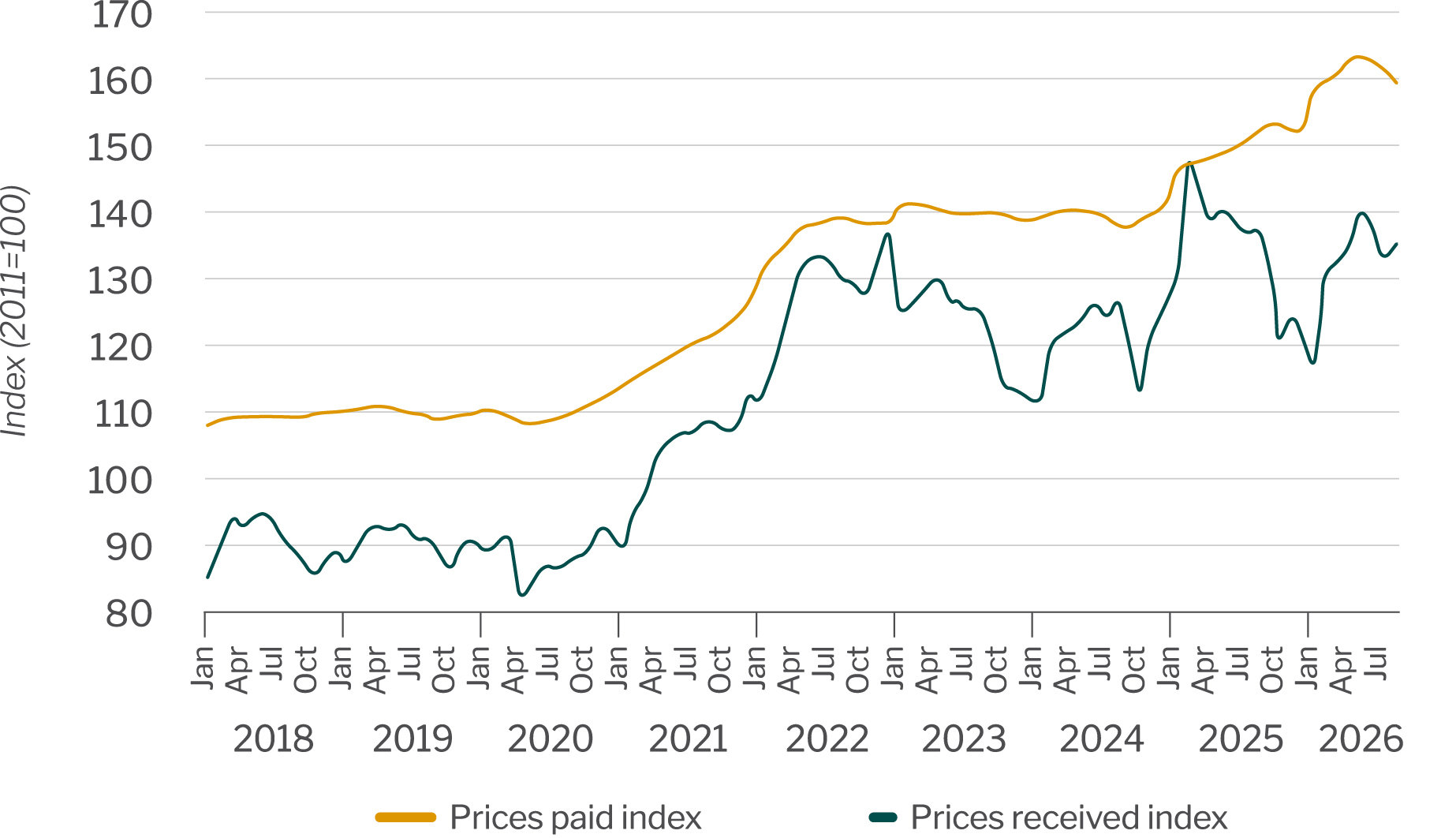
Source: USDA NASS.
2. Drought and weather continue to challenge producers.
Weather and water availability ranked among the top concerns raised by producers across AgWest's territory. The 2026 growing season highlighted agriculture's continued vulnerability to weather extremes. Much of the West experienced drought, below-normal precipitation, prolonged heat, and tightening water supplies. Idaho declared a statewide drought emergency in April. Meanwhile, July became the hottest month on record for the contiguous U.S., with Arizona and eastern Montana experiencing record-breaking temperatures. These conditions reduced yields, strained water resources, and increased production risks for many Western producers.
Looking ahead, weather uncertainty remains elevated. Forecasts point to the development of a strong El Niño, with some meteorologists characterizing it as a potential "super El Niño." Historically, El Niño has brought drier conditions to the Pacific Northwest and Montana while increasing precipitation across the Southwest. After several years of weather volatility, producers are closely monitoring forecasts and preparing for another potentially challenging year.
Typical El Niño Weather
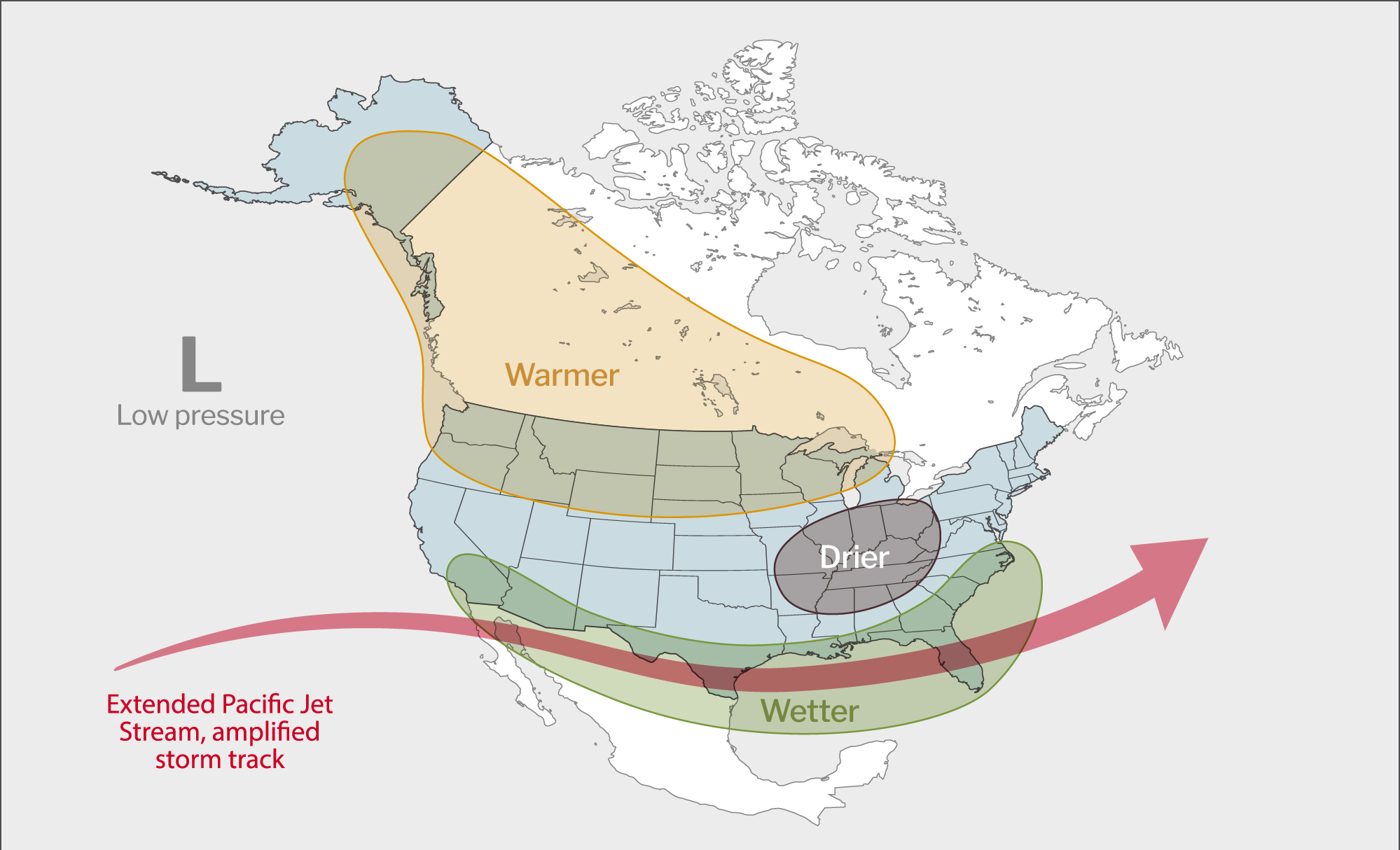
Source: NOAA.
3. Labor costs and availability remain structural challenges.
While worker availability remains a concern, producers increasingly point to rising wages, regulatory requirements and workforce uncertainty as a growing threat to profitability. These factors are forcing producers to reconsider long-term business strategies. As one producer noted, “Labor's always going to be an issue. I don't know how that's ever going to change.”
Data from USDA Census of Agriculture highlights the magnitude of the challenge. Hired labor expenses per operation are substantially higher across most AgWest states than the national average, reflecting the labor-intensive nature of many of the region's agricultural industries. In response, where profitability allows, some producers are investing in automation and efficiency improvements to reduce labor dependence and remain competitive.
Hired labor expense per farm operation, U.S. average vs. AgWest states
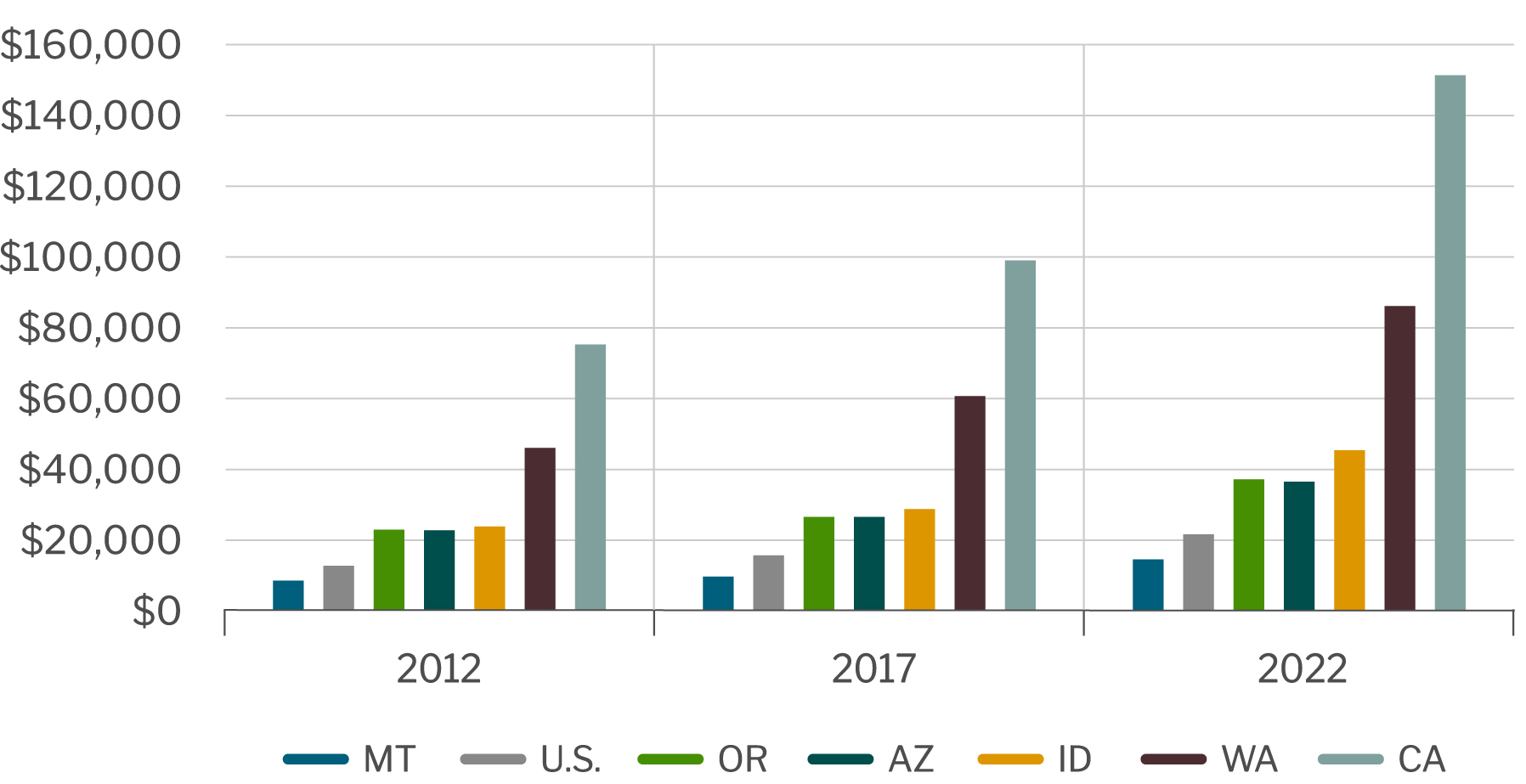
Source: USDA Census of Agriculture, AgWest Farm Credit.
4. Trade uncertainty clouds the export outlook.
Trade uncertainty emerged as another major concern, with producers citing tariffs, shifting trade relationships, and uncertainty surrounding future export demand and market access. As one participant noted, "We don't have the export markets available that we used to," while another described the current environment as "the fear of unknown demand."
These concerns are particularly relevant for AgWest producers given the region's strong reliance on international markets. Nationally, approximately one out of every five dollars generated by U.S. agriculture comes from exports. Export dependence is even greater in the West as many export-oriented commodities benefit from direct access to major Pacific ports, with California exporting more than 35% of its agricultural output and Arizona more than 20%. Disruptions to trade flows or export demand can have an outsized impact on Western producers.
Optimism endures despite challenges .
Despite these challenges, a common theme emerged throughout the discussions: resilience. Despite rising costs, weather uncertainty, labor challenges, and shifting markets, producers expressed confidence in their ability to adapt and persevere. One producer captured the sentiment shared across many sectors of agriculture: “We’ll survive. There's no doubt there's going to be tough times coming for all of us. We'll make it… Because whether we're producing iceberg lettuce, beef, sheep, timber, or fish out of the Bering Sea, billions of people rely on us to eat. We don’t lose the optimism.” While the challenges facing agriculture are significant, so is the resilience of the producers who continue to invest, innovate, and adapt.
Return to Industry Insights home page
IN THIS SECTION


Quarterly Economic Update
The U.S. economy continues to navigate policy changes, trade uncertainty, and evolving monetary policy.
Learn more