 Weather
 Locations
 Careers
 Login
Login

Spotlight: Background on the conflict in Iran
U.S. and Israel began attacking Iran on February 28, 2026, with the objective of facilitating a change in leadership and reducing Iran’s nuclear and ballistic missile capacity. A temporary ceasefire was reached on April 8 and it remains unclear if it will hold at the time of this report. The following provides high-level context and important considerations as it relates to this conflict. This month’s Quarterly Economic Update discusses economic and interest rate implications. The Monthly Market Update’s Crop Inputs section discusses implications to energy, fertilizers and transportation, while the Industry Updates sections discuss how specific agriculture industries are impacted.
Strategic importance of the Strait of Hormuz
Approximately 20% of oil supply and 30% of fertilizer supply (primarily nitrogen and phosphate products) are transported through the Strait of Hormuz, a narrow and shallow waterway separating major producers in the Persian Gulf from international markets. Iran is situated directly on this waterway and maintains the capacity to stop shipments via direct attacks. Insurance premiums on vessels have become uneconomical due to this threat.
Strait of Hormuz
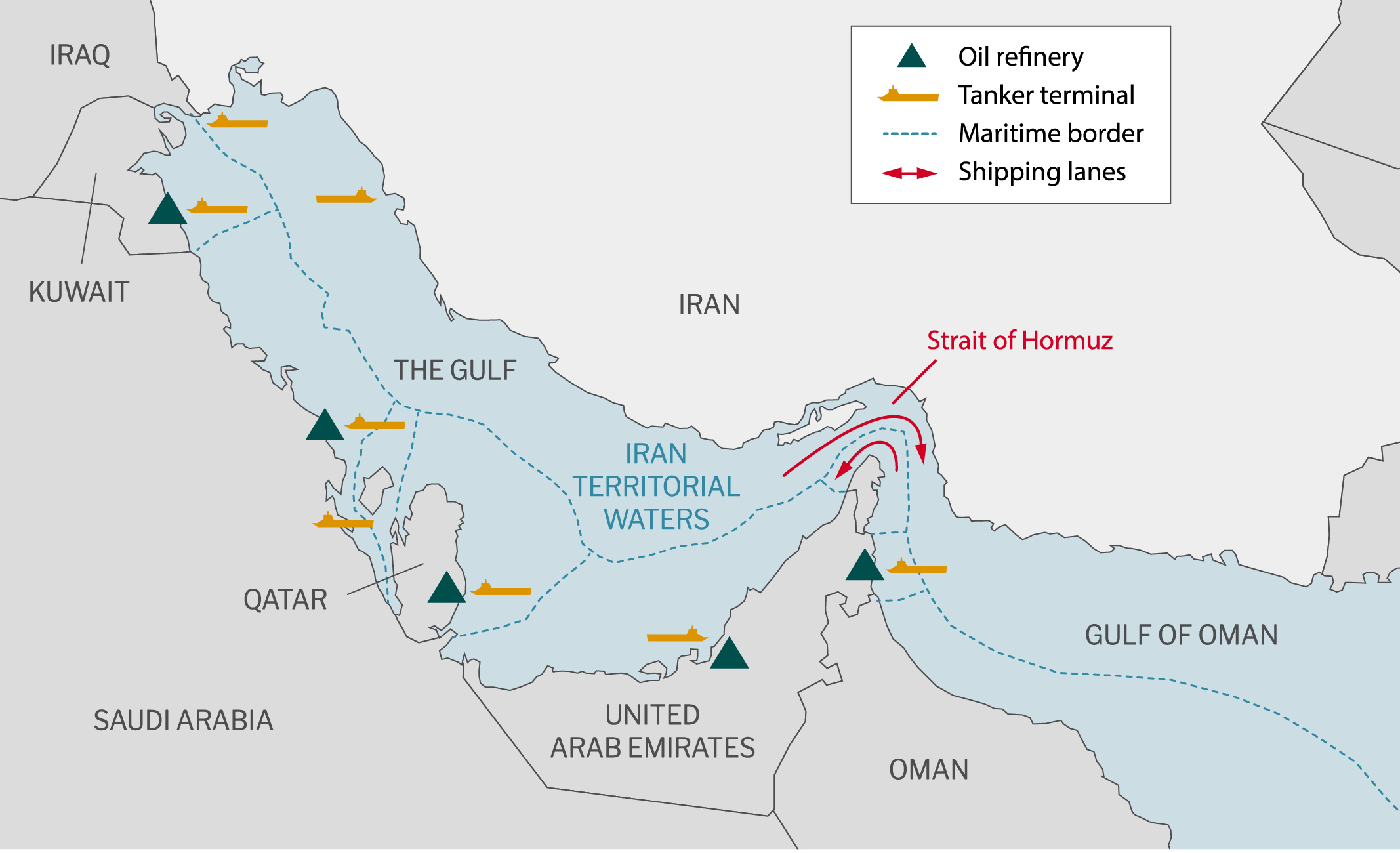
Source: RadioFreeEurope.org.
Important considerations
- Iran utilizes inexpensive drone technology to thwart shipments through the Strait of Hormuz, of which the U.S. and Israel are not well prepared to defend against. If the conflict resumes, the U.S. may resort to measures such as attacking critical civilian infrastructure. While this may incentivize the Iranian government to change course, it risks further escalation, humanitarian impacts and increased regional instability.
- Supply chokepoints have resulted in lower oil production levels outside of Iran. Facilities are not easily reopened, suggesting that even when the Strait of Hormuz reopens, it may take time for production levels to return to normal levels.
- Oil prices doubled despite only 20% of global supply coming offline. This was likely due to the increasing risk of prolonged conflict and lower-than-expected inventory levels.
Broad implications for agriculture
The potential consequences of a prolonged conflict in Iran are significant. Currently, U.S. agriculture producers face higher finance, energy, fertilizer and transportation costs. Falling discretionary income among consumers may force changes in behavior, such as substituting away from higher value products or delaying home purchases (impacting lumber demand). Some industries may have to reroute shipments away from the Middle East.
Return to Industry Insights home page
IN THIS SECTION

.jpg?Status=Master&sfvrsn=68087301_1 "My project-1 (26)")
Economic headlines, data and trends
Monthly economic trends, data and major industry headlines.
Learn more