 Weather
 Locations
 Careers
 Login
Login

Foreign land ownership in the western U.S.
Foreign ownership of agricultural land in the U.S. has been growing, now covering about 45 million acres nationwide, or 3.5% of all privately held agricultural land. Foreign countries might purchase farmland in the U.S. to diversify their investments, gain access to a stable and lucrative agricultural market, and capitalize on the country's rich natural resources and advanced farming infrastructure. Within the western U.S., foreign entities hold over 6 million acres, or roughly 3.2% of privately held agricultural land. This article takes a closer look at AgWest’s seven focus states and highlights how this land is distributed and utilized.
Extent of foreign-owned land by state
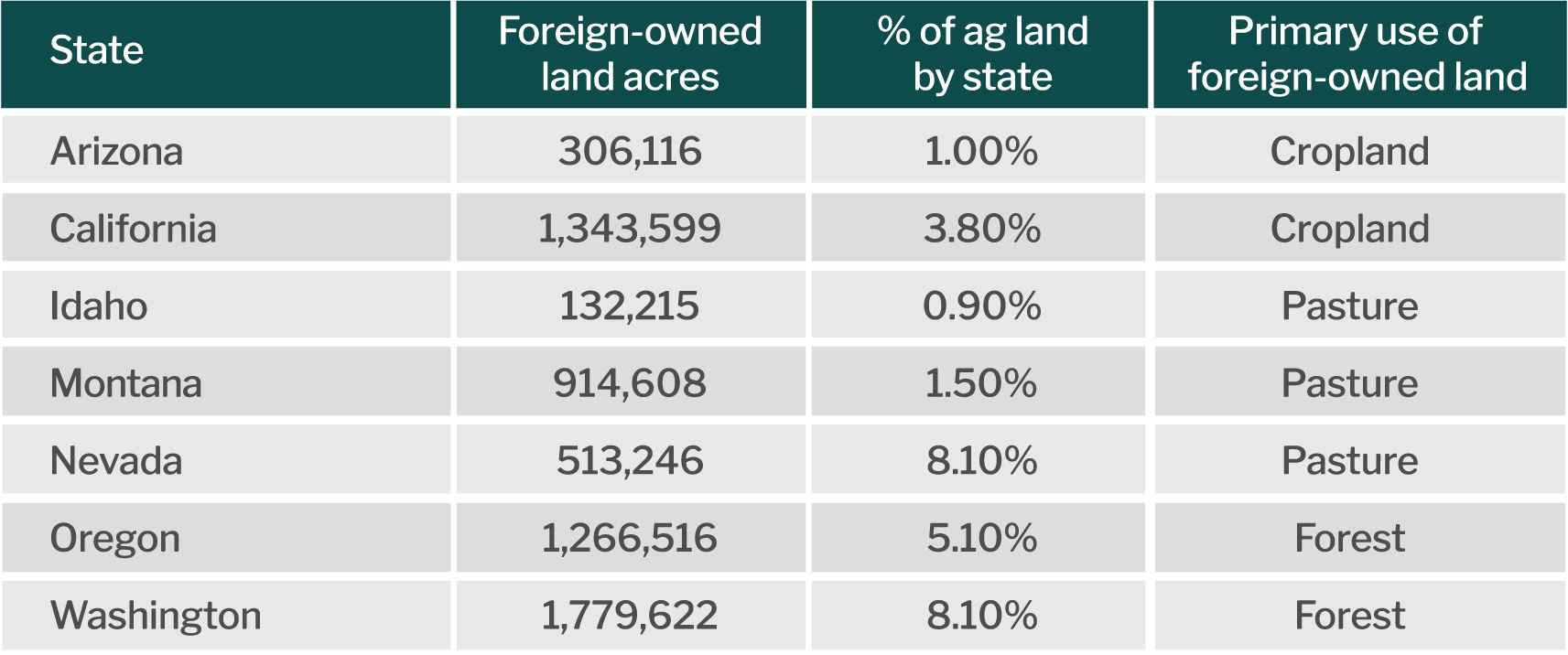
Foreign-owned agricultural land in the Western U.S. varies widely by state and use.
Extent of foreign-owned land by state
Source: USDA: US Foreign Agricultural Investments Dataset.
Foreign-owned land in the West is primarily used for timber production, cropland and pasture. Washington and Oregon lead in forestland ownership, with nearly 577,000 and 406,000 acres, respectively, driven by Canadian and international timber investments. California and Arizona see significant foreign investments in cropland, including California’s vineyards and orchards and Arizona’s irrigated farmland. Foreign ownership in Montana, Idaho, and Nevada is mainly focused on pastureland, largely used for cattle grazing.
Who owns the land?
The majority of foreign owners in the West are from U.S. allies, particularly Canada and Europe. Canadian companies are key players in timber and grazing investments in Washington, Oregon and Montana. European firms are prominent landholders in California and Idaho, while Mexican investors are among Arizona’s top owners, reflecting agricultural links near the border. Despite public concern, foreign ownership by China and other adversarial nations is minimal, representing less than 1% of foreign-held U.S. farmland.
Foreign land ownership trends and policy developments
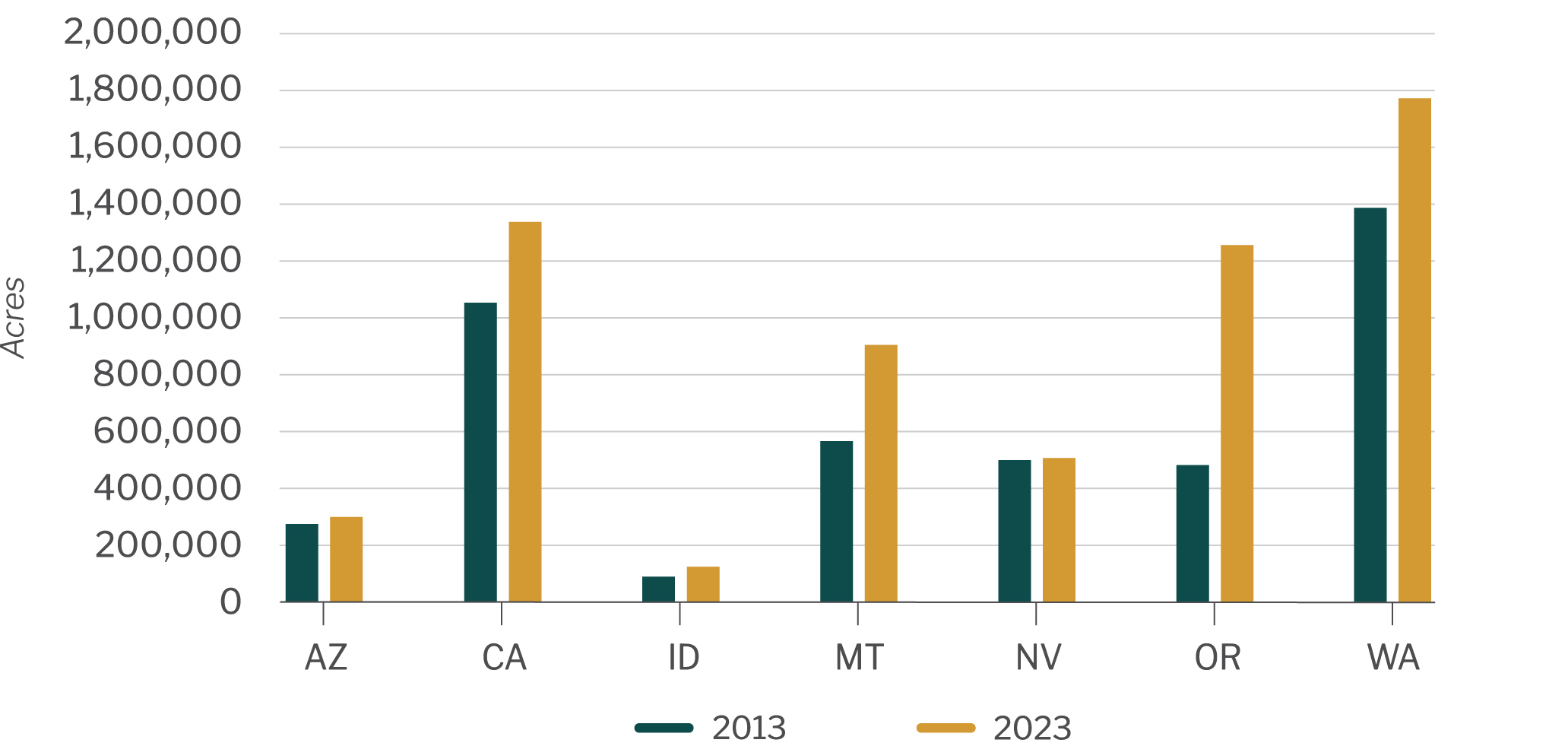
Over the past decade, foreign agricultural land ownership in the U.S. has grown by 72%. This increase has been driven by acquisitions for renewable energy projects and the purchase of a major pork producer by a foreign entity. While land owned by foreign entities in the West has also increased during this time, it has grown at a slower rate compared to the national average.
Foreign land ownership trends and policy developments
Source: USDA: Foreign Holdings of U.S. Agricultural Land.
Implications of foreign land ownership
The implications of foreign land ownership extend beyond the figures, raising questions about policies, resource allocation and security. Here are three key impacts to consider:
Policy Changes - States like Idaho and Arizona have implemented measures to address foreign ownership concerns. For example, Idaho passed legislation in 2023 prohibiting foreign government ownership of agricultural land. Similar discussions are happening in California and Washington, where new restrictions could alter investment patterns for both foreign and domestic buyers. Future policymaking might focus on balancing economic benefits with national interests.
Resource and Community Impacts - Foreign investment often raises local concerns over water usage, particularly in arid regions like Arizona. For instance, Arizona opted not to renew some 10-year leases held by foreign entities due to water resource strains. Such decisions highlight the need for responsible land management practices to benefit both local communities and investors.
Security Considerations - While foreign land ownership in the U.S. is dominated by allies, national security concerns persist, especially with adversarial nations. Policymakers are increasingly calling for careful monitoring to ensure land acquisitions do not pose risks to critical infrastructure, food supply chains or national defense.
Foreign ownership of U.S. agricultural land is a complex issue, bringing benefits like economic investment and challenges like resource management. Continued growth in land acquisitions underscores the importance of informed policymaking and innovative solutions. By addressing critical concerns and fostering sustainable practices, agricultural land in the West can remain a valuable resource for generations to come.
Return to Industry Insights home page
IN THIS SECTION

.jpg?sfvrsn=68087301_1 "My project-1 (26)")
Economic headlines, data and trends
Monthly economic trends, data and major industry headlines.
Learn more