 Weather
 Locations
 Careers
 Login
Login

March economic headlines
U.S. strikes Iran.
The U.S. and Israel started conducting military operations in Iran in response to failed negotiations and a perceived risk of an attack. The objectives are to change the country’s leadership and reduce its ability to project military power, including the use of nuclear and ballistic weapons. The full impact of this conflict will depend on how long it persists, but risks include disruptions to oil flows through the Strait of Hormuz and regional instability.
Supreme Court curbs presidential tariff authority.
The Supreme Court ruled that the administration exceeded its authority in imposing broad emergency tariffs, striking down a significant portion of the existing tariff regime. President Trump responded by signaling alternative trade actions, sustaining uncertainty around trade policy, inflation passthrough, and global supply chains. Markets have interpreted the ruling as marginally growth positive but still inflation relevant given the potential for renewed tariff measures.
Consumer loan delinquencies continue to normalize, with pockets of stress.
Recent data shows consumer delinquency rates drifting higher as pandemic era supports fade, with stress most evident in credit cards and student loans. Mortgage delinquencies remain closer to historical norms, highlighting a divergence between secured and unsecured household credit.
Longterm interest rates declined in February, easing financial conditions.
The 10-year Treasury yield fell notably during February, contributing to mortgage rates dipping below 6% for the first time in several years. Lower rates could modestly support housing activity and refinancing, though affordability remains constrained by elevated home prices.
10-Year Treasury Yield
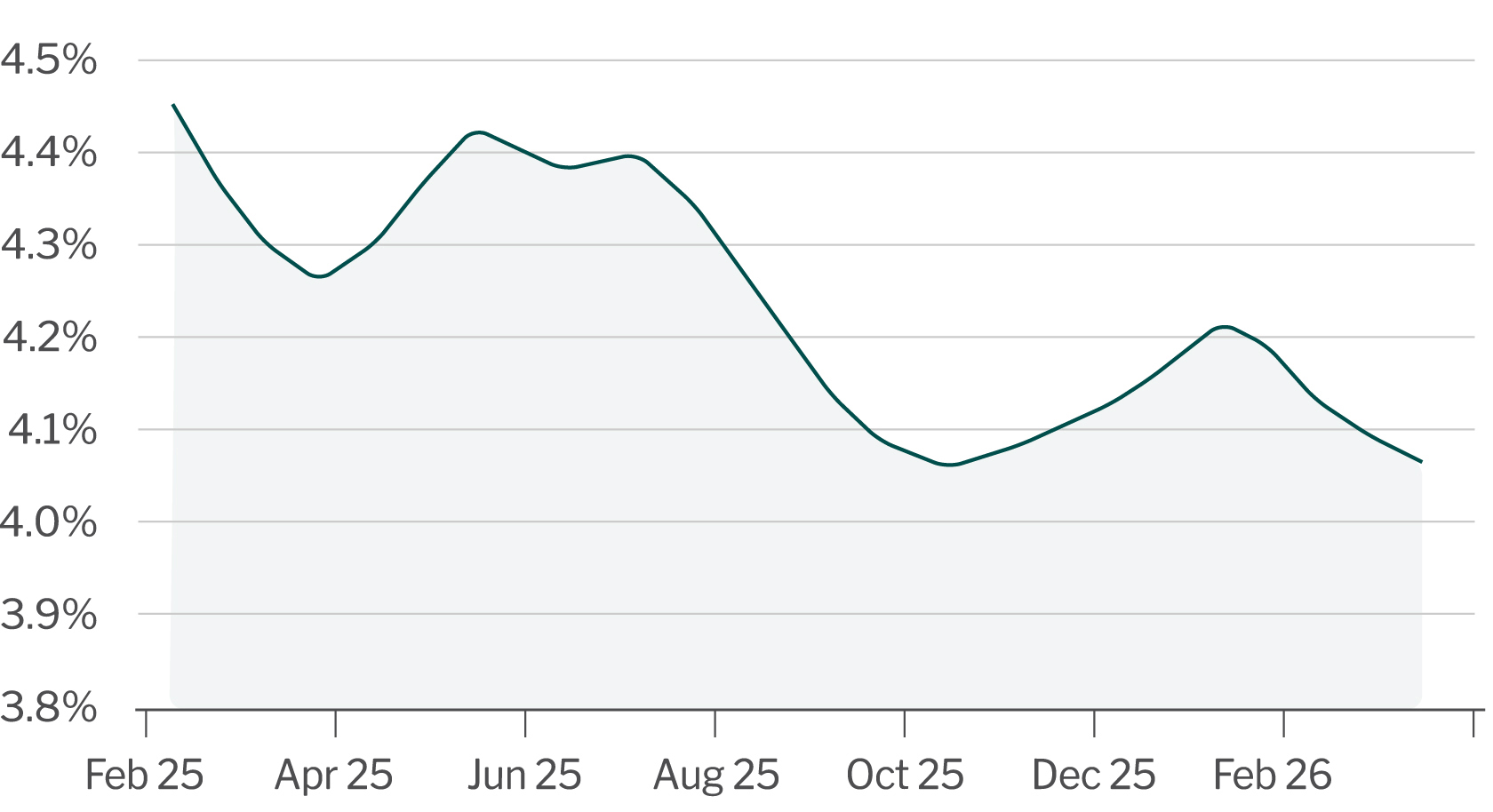
Source: Treasury Department.
Return to Industry Insights home page
IN THIS SECTION

.jpg?Status=Master&sfvrsn=68087301_1 "My project-1 (26)")
Economic headlines, data and trends
Monthly economic trends, data and major industry headlines.
Learn more