Weather
 Locations
 Careers
 Login
Login


Cattle updates
Record highs fade, but cattle fundamentals remain bullish.
Cattle markets have retreated from the record highs reached earlier this year, but underlying fundamentals remain supportive. The pullback reflects a market moving off exceptional highs rather than a meaningful shift in outlook.
Feedlot inventories totaled 11.1 million head on Aug. 1, up 2% from a year earlier, as longer feeding periods and the gradual return of Mexican feeder cattle imports helped offset lower placements earlier in the year. Even so, beef production continues to run below previous expectations as slaughter rates remain historically low, prompting USDA to reduce its 2026 beef production forecast.
Cattle and beef imports are providing some relief to tight supplies, though uncertainty remains regarding their impact on the broader market. The reopening of the Douglas, Arizona, and Santa Teresa, New Mexico, crossings has improved confidence in feeder cattle flows, with more than 18,000 head entering the U.S. during the past six weeks. The crossings were previously closed due to concerns surrounding New World screwworm, a flesh-eating parasite first detected in the U.S. on June 3. Since then, cases have slowed markedly, declining from 31 detections in the first month to just four over the past month. All cases have remained confined to southern New Mexico and Texas. Although the situation has improved, the industry continues to monitor the pest closely, as a broader outbreak would pose a significant threat to U.S. cattle production.
Markets have also focused on the expanded 300,000-metric-ton tariff-rate quota for imported lean beef trimmings. Beginning Sept. 1, the first 100,000 metric tons became eligible to enter the U.S. at a reduced tariff rate, with the goal of increasing supplies used in ground beef production and easing retail beef prices. The initial tranche alone exceeds the 70,000-80,000 metric tons of lean beef trimmings typically imported. However, the market impact remains difficult to isolate. While cattle prices have eased from the record highs reached in May, it remains difficult to determine how much of the decline can be attributed to increased imports versus typical seasonal pressures. The fall calf run traditionally weighs on prices as large numbers of spring-born calves enter the market, although many contracted calves continue to command prices above $4.00 per cwt. Retail beef prices have shown little sign of meaningful relief. The market impact of expanded lean beef imports remains unclear and continues to be closely monitored by producers and industry analysts.
Demand remains one of the market's strongest pillars. Consumers have continued purchasing beef despite elevated retail prices, while historically low beef cow numbers and slow herd rebuilding continue to underpin the longer-term outlook. Competition from expanding pork and poultry production, along with growing beef imports, may create headwinds, but the broader market story remains unchanged: cattle supplies are tight, demand is resilient, and fundamentals continue to support the sector despite recent price consolidation.
Profitability
September 16, 2026Cattle feeders: Slightly profitable - Bearish 12-month outlook
Cow-calf producers: Very profitable - Bearish 12-month outlook
Strong fed cattle prices continue to offset elevated feeder cattle costs, although narrowing margins and softer cattle prices have reduced profitability from earlier highs.
The outlook has turned more bearish over the next 12 months as calf prices have retreated from record highs and concerns grow over increased beef imports, higher feed costs, and growing uncertainty surrounding cattle prices and producer margins.
Exports play a key role in driving demand for U.S. beef, with 12% of production exported. Major export destinations include Japan, South Korea, China, Mexico and Canada. Exports also increase the value of beef byproducts, including variety meats (e.g., tongue, cheek meat, hearts) along with tallow and hides, which have limited demand domestically. The higher prices and increased sales of these items boost overall live cattle values and improve packers' margins.
Beef imports primarily consist of lean processing beef used in ground beef to meet domestic consumer demand. Over the past decade, U.S. imports of fresh or chilled beef have more than doubled. Given the tight domestic cattle supply, beef imports are important to meeting consumer demand for beef.
Beef production, exports and imports
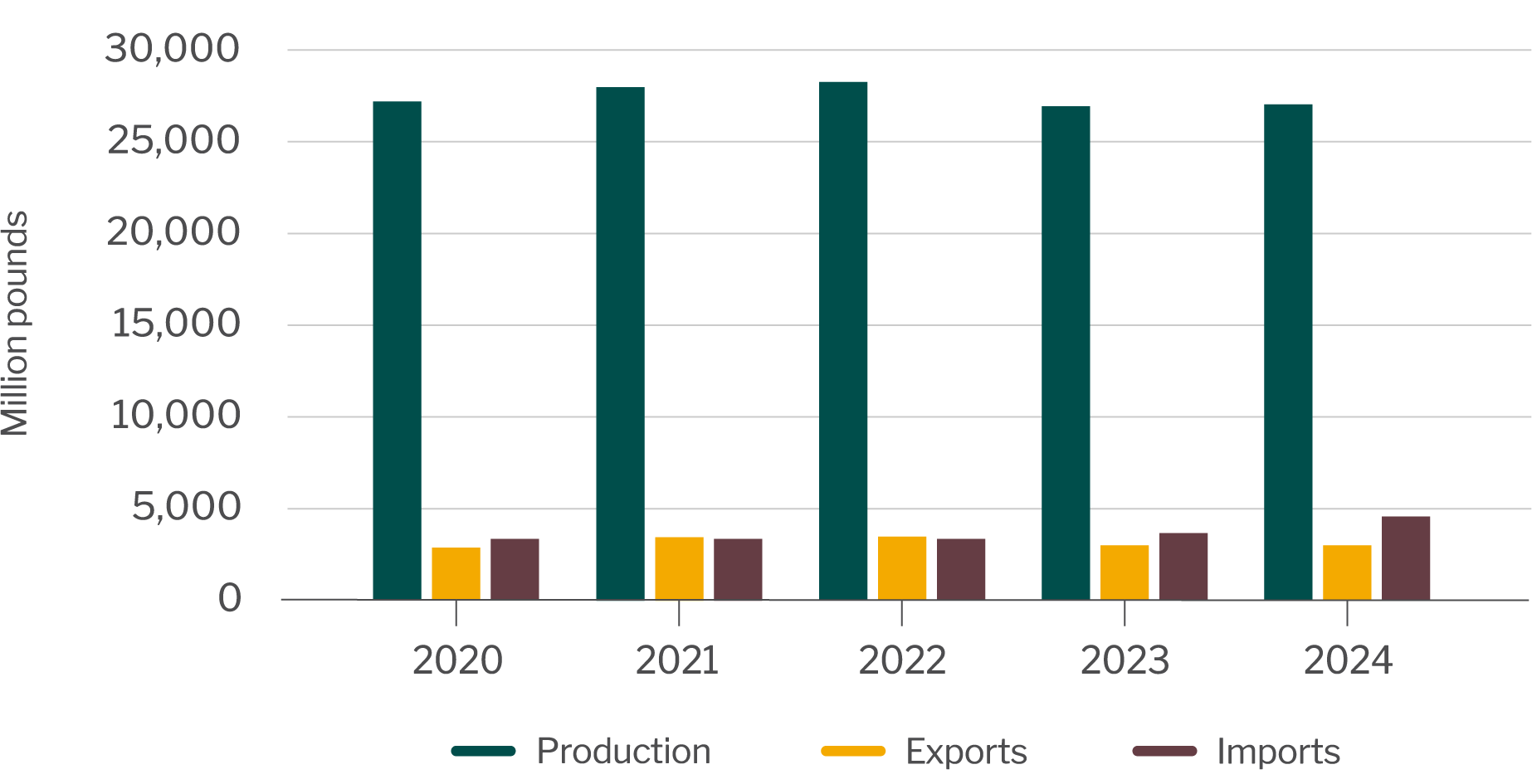
USDA Livestock and Meat International Trade Data.
Tariff tracker - Tariff rates applied to U.S. trade partners are consistenly updated to reflect policy changes. The World Trade Organization (WTO) tracks duties and tariffs on beef products and live cattle by country. For your convenience, the following links will take you to tariff data on fresh or chilled bovine meat (a leading U.S. export for the cattle industry) for top markets including South Korea and China. Beef products are currently exempt from tariffs for Mexico and Canada under the United States-Mexico-Canada Agreement (USMCA), but please refer to the U.S. Trade Representative website for up-to-date information. WTO also tracks rates for beef imports to the U.S. Please consult with a trade lawyer or professional for detailed and up-to-date insights on tariff rates and their application to cattle.
For guidance on interpreting duty and tariff rates, please refer to our Tariff Guide.
Cattle updates
Record highs fade, but cattle fundamentals remain bullish.
Cattle markets have retreated from the record highs reached earlier this year, but underlying fundamentals remain supportive. The pullback reflects a market moving off exceptional highs rather than a meaningful shift in outlook.
Feedlot inventories totaled 11.1 million head on Aug. 1, up 2% from a year earlier, as longer feeding periods and the gradual return of Mexican feeder cattle imports helped offset lower placements earlier in the year. Even so, beef production continues to run below previous expectations as slaughter rates remain historically low, prompting USDA to reduce its 2026 beef production forecast.
Cattle and beef imports are providing some relief to tight supplies, though uncertainty remains regarding their impact on the broader market. The reopening of the Douglas, Arizona, and Santa Teresa, New Mexico, crossings has improved confidence in feeder cattle flows, with more than 18,000 head entering the U.S. during the past six weeks. The crossings were previously closed due to concerns surrounding New World screwworm, a flesh-eating parasite first detected in the U.S. on June 3. Since then, cases have slowed markedly, declining from 31 detections in the first month to just four over the past month. All cases have remained confined to southern New Mexico and Texas. Although the situation has improved, the industry continues to monitor the pest closely, as a broader outbreak would pose a significant threat to U.S. cattle production.
Markets have also focused on the expanded 300,000-metric-ton tariff-rate quota for imported lean beef trimmings. Beginning Sept. 1, the first 100,000 metric tons became eligible to enter the U.S. at a reduced tariff rate, with the goal of increasing supplies used in ground beef production and easing retail beef prices. The initial tranche alone exceeds the 70,000-80,000 metric tons of lean beef trimmings typically imported. However, the market impact remains difficult to isolate. While cattle prices have eased from the record highs reached in May, it remains difficult to determine how much of the decline can be attributed to increased imports versus typical seasonal pressures. The fall calf run traditionally weighs on prices as large numbers of spring-born calves enter the market, although many contracted calves continue to command prices above $4.00 per cwt. Retail beef prices have shown little sign of meaningful relief. The market impact of expanded lean beef imports remains unclear and continues to be closely monitored by producers and industry analysts.
Demand remains one of the market's strongest pillars. Consumers have continued purchasing beef despite elevated retail prices, while historically low beef cow numbers and slow herd rebuilding continue to underpin the longer-term outlook. Competition from expanding pork and poultry production, along with growing beef imports, may create headwinds, but the broader market story remains unchanged: cattle supplies are tight, demand is resilient, and fundamentals continue to support the sector despite recent price consolidation.

Profitability
September 16, 2026Cattle feeders: Slightly profitable - Bearish 12-month outlook
Cow-calf producers: Very profitable - Bearish 12-month outlook
Strong fed cattle prices continue to offset elevated feeder cattle costs, although narrowing margins and softer cattle prices have reduced profitability from earlier highs.
The outlook has turned more bearish over the next 12 months as calf prices have retreated from record highs and concerns grow over increased beef imports, higher feed costs, and growing uncertainty surrounding cattle prices and producer margins.
Exports play a key role in driving demand for U.S. beef, with 12% of production exported. Major export destinations include Japan, South Korea, China, Mexico and Canada. Exports also increase the value of beef byproducts, including variety meats (e.g., tongue, cheek meat, hearts) along with tallow and hides, which have limited demand domestically. The higher prices and increased sales of these items boost overall live cattle values and improve packers' margins.
Beef imports primarily consist of lean processing beef used in ground beef to meet domestic consumer demand. Over the past decade, U.S. imports of fresh or chilled beef have more than doubled. Given the tight domestic cattle supply, beef imports are important to meeting consumer demand for beef.
Beef production, exports and imports
USDA Livestock and Meat International Trade Data.
Tariff tracker - Tariff rates applied to U.S. trade partners are consistenly updated to reflect policy changes. The World Trade Organization (WTO) tracks duties and tariffs on beef products and live cattle by country. For your convenience, the following links will take you to tariff data on fresh or chilled bovine meat (a leading U.S. export for the cattle industry) for top markets including South Korea and China. Beef products are currently exempt from tariffs for Mexico and Canada under the United States-Mexico-Canada Agreement (USMCA), but please refer to the U.S. Trade Representative website for up-to-date information. WTO also tracks rates for beef imports to the U.S. Please consult with a trade lawyer or professional for detailed and up-to-date insights on tariff rates and their application to cattle.
For guidance on interpreting duty and tariff rates, please refer to our Tariff Guide.