 Weather
 Locations
 Careers
 Login
Login

Treasury financing and agricultural implications

Rising long-term interest rates have become an increasingly important issue for financial markets and the agricultural sector. Federal debt has grown substantially over the past decade, surpassing $40 trillion, requiring the U.S. Treasury to issue increasing amounts of debt to finance government operations and refinance maturing obligations. The resulting growth in Treasury supply, combined with persistent inflation concerns and AI companies’ demand for financing has contributed to a sharp rise in long-term interest rates.
During the summer of 2026, the 30-year Treasury yield climbed above 5.3%, its highest level since 2007. Higher Treasury yields increase borrowing costs throughout the economy because they serve as a benchmark for many consumer, business, and agricultural loans. In response, Treasury Secretary Scott Bessent announced an expansion of the Treasury Department's long-term debt buyback program, increasing purchases of outstanding 10- to 30-year securities. While yields briefly moved lower following the announcement, market reactions suggest investors remain concerned about the long-term outlook for government borrowing and inflation.
Yields on 30-year Treasury bonds
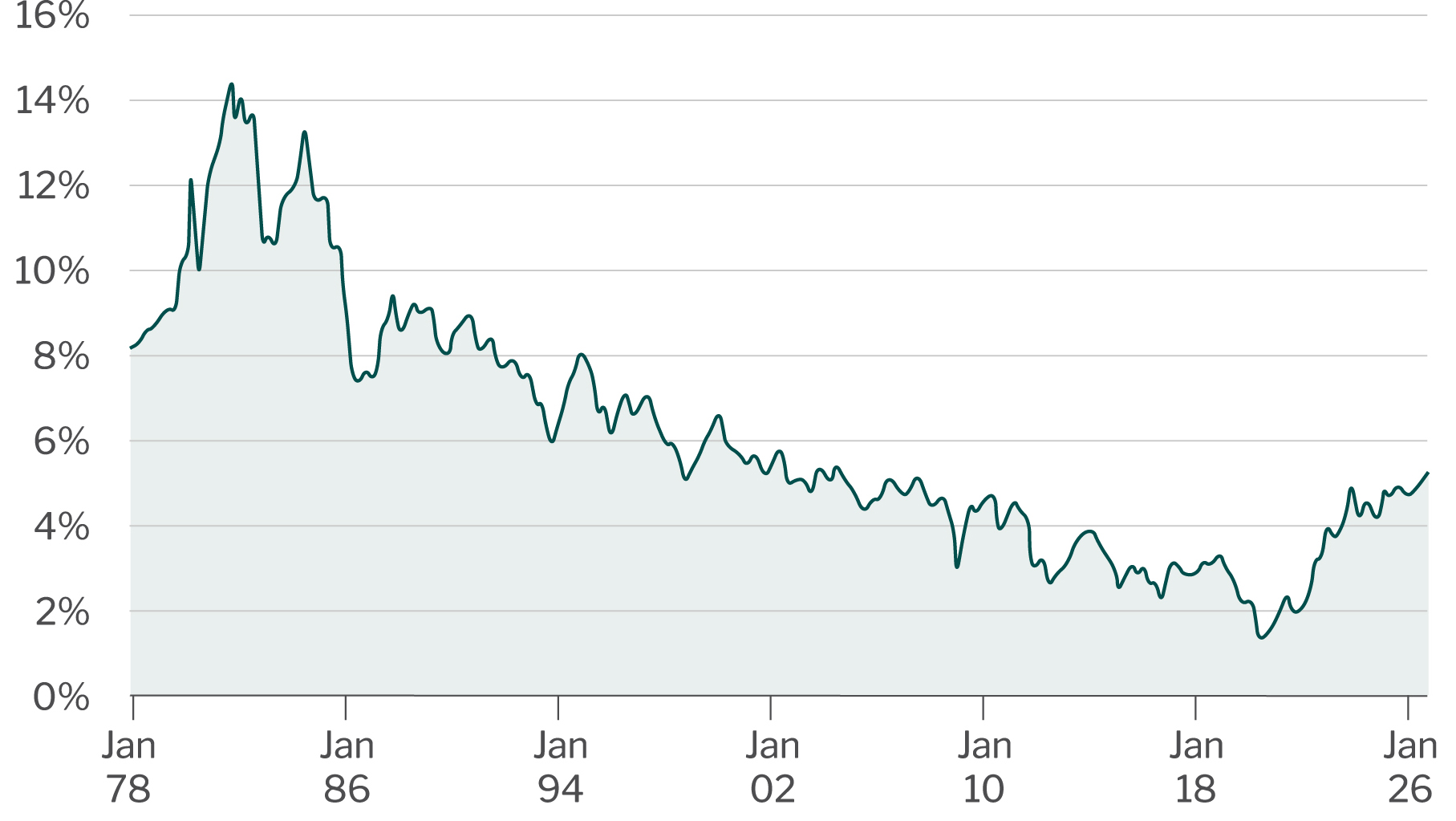
Source: Board of Governors of the Federal Reserve System.
Attention has also shifted to the Federal Reserve, where newly appointed Chairman Kevin Warsh is widely viewed as favoring a more aggressive stance toward inflation. Markets generally expect tighter monetary policy to keep short-term interest rates elevated until inflation concerns ease, with the goal of ultimately reducing inflation expectations and helping stabilize long-term rates. Conversely, if the Fed is pressured into lowering rates due to weakening economic conditions, long-term rates could rise.
For agriculture, long-term interest rates are particularly important because they influence farmland values, real estate financing, equipment purchases, and other capital investments. Lower rates generally support land values and improve producer affordability by reducing financing costs. Stable or declining long-term rates can also improve borrower cash flow and support refinancing activity. Conversely, persistently high or rising rates could pressure farmland values, increase debt service costs, and create additional financial stress for highly leveraged producers. As a result, Treasury and Federal Reserve actions aimed at stabilizing long-term interest rates will remain an important factor shaping agricultural credit conditions and investment decisions in the months ahead.
Return to Customer Stories home page.