 Weather
 Locations
 Careers
 Login
Login

Spotlight: Labor costs
Adverse Effective Wage Rate (AEWR)
Recent changes to AEWR, which sets base wages for H-2A labor, should lower costs for producers. A two-tiered structure has been implemented along with a downward compensation adjustment for workers who receive free housing (with the caveat being rates cannot fall below states’ minimum wage). Tier 1 rates are applied to positions that require little to no training, while Tier 2 rates are for those requiring at least three months of training (the vast majority of agriculture workers fall under Tier 1). The Department of Labor will now source wage data from the Occupational Employment and Wage Statistics (OEWS) survey rather than the Farm Labor Survey (FLS), which was discontinued in August 2025. The impact of this change remains unclear.
Minimum wages
Minimum wages are increasing in Arizona (3.1% year over year), California (2.4%), Montana (2.8%) and Washington (2.8%) in 2026. Oregon has not released rates as they are updated in July. Idaho’s minimum wage typically does not change from year to year.
2026 state minimum wages and AEWR for field and livestock workers
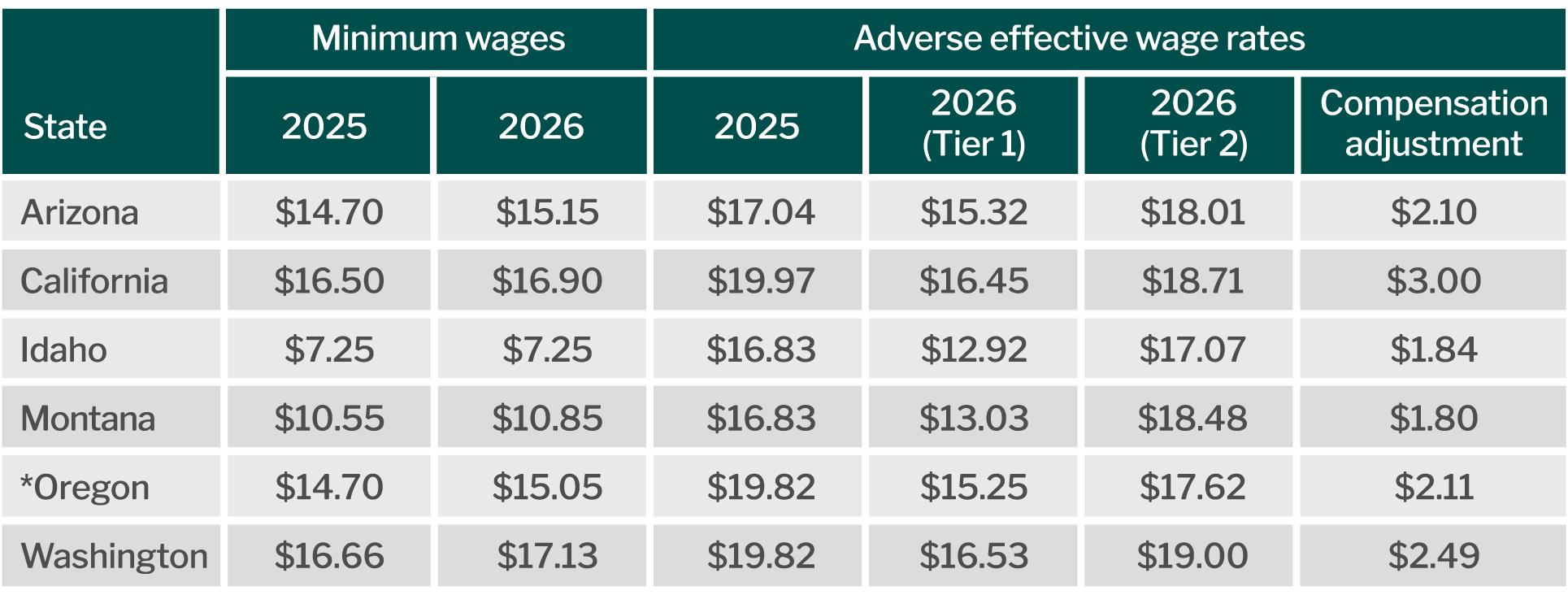
Source: FederalRegister.gov. Rates represent the mean of related job categories. *Oregon’s minimum wage will be updated in July 2026.
Impact to producers in the West
Producers who rely on H-2A labor should benefit from these recent changes. In the West, California and Washington will experience the greatest impact as they rely most heavily on this workforce (both states produce a significant level of fruits and/or vegetables, both of which are labor intensive).
H-2A agricultures workers by state, 2024
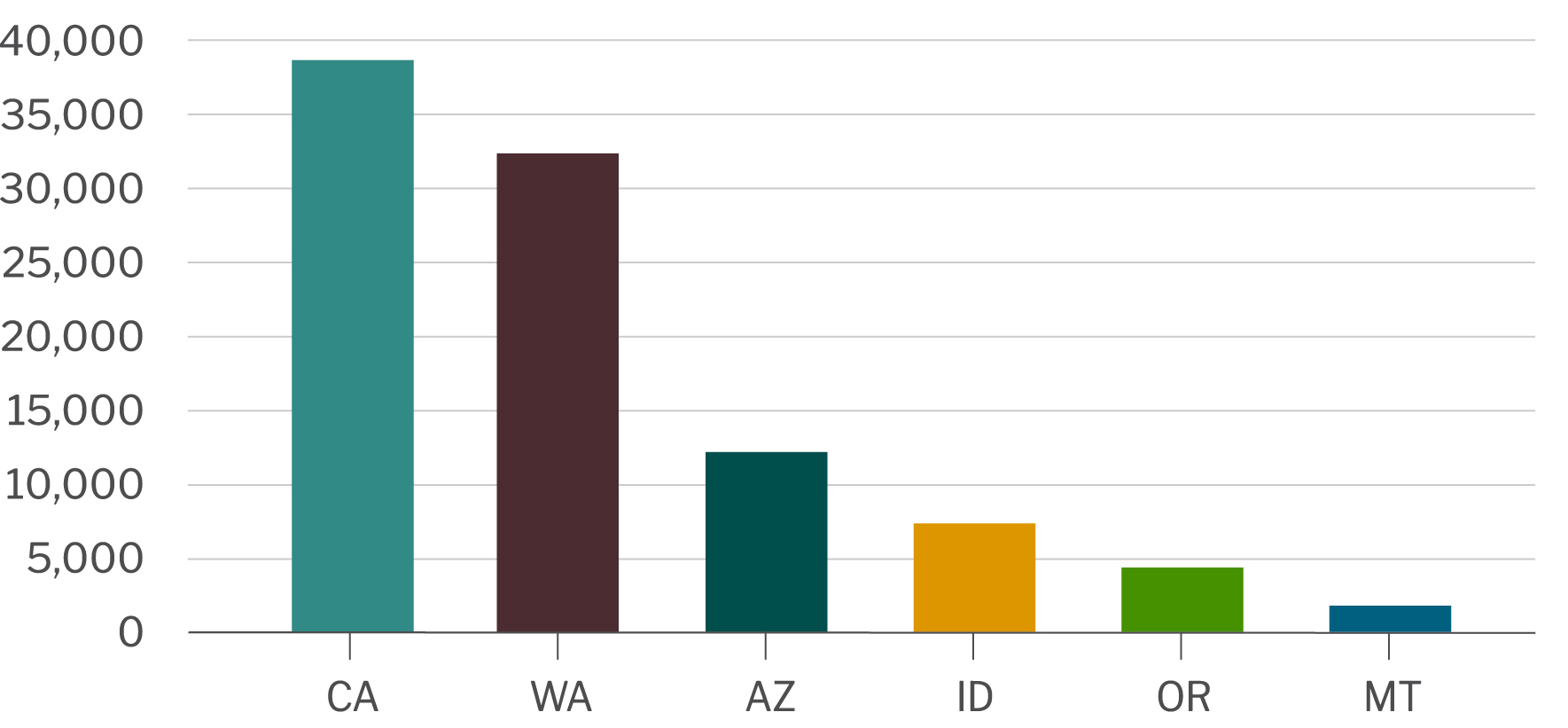
Source: Department of Labor.
Return to Customer Stories home page.