 Weather
 Locations
 Careers
 Login
Login

Interest rate trends
Many expect the Federal Reserve (Fed) to cut interest rates later this year and in 2026, which is likely to be more impactful on short-term rates than long-term rates. This Spotlight sheds light on the interest rate dynamics at play.
Some basics – The federal funds rate is the target rate set by the Fed and used by banks in overnight lending activities. A treasury bond is debt issued by the federal government, with maturity dates that range from months to decades.
Interest rate dynamics – Yields for treasury bonds set the lower bound for private financing costs since they are considered the safest assets to own. (As treasury yields rise, so do financing costs for businesses and consumers.)
- Short-term: The federal funds rate is the primary driver of short-term lending rates, including treasury bonds with maturity dates of two years or less.
- Long-term: The federal funds rate does impact long-term rates, but the correlation between the federal funds rate and longer-dated treasury bonds has weakened over time (see chart below). Increased competition from global capital markets, inflation expectations, employment trends and geopolitical events started to have stronger influence.
Investors often move into treasury bonds during high-risk conditions (war, recession, etc.), with allocations to short- vs. long-term based on their specific strategy and risk tolerance.
Federal funds rate and 2-year and 10-year treasury yields
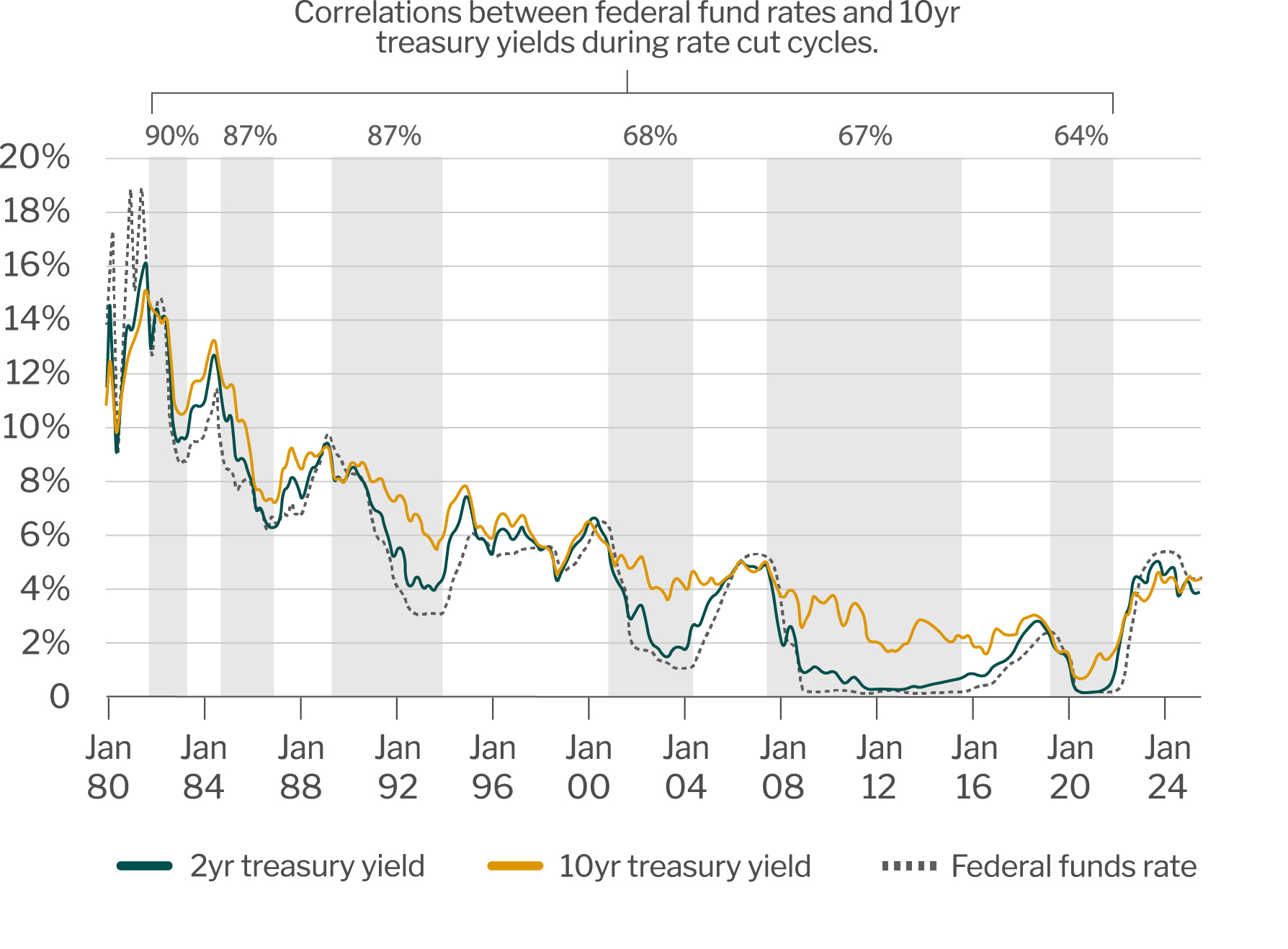
Source: Board of Governors of the Federal Reserve System.
Take-away – If the Fed lowers interest rates, this will have a direct impact on short-term financing costs. For agriculture producers, this could mean lower rates for operating loans and other short-term debt. The impact to long-term financing costs is less certain and dependent on inflation expectations, economic growth and geopolitical dynamics.
Return to Customer Stories home page.